
Fresh news on agriculture in the United Kingdom
Provided by AGP
Ethiopia Dairy Market 2026-2034 | Size, Share, Price, Opportunity
Ethiopia Dairy Market
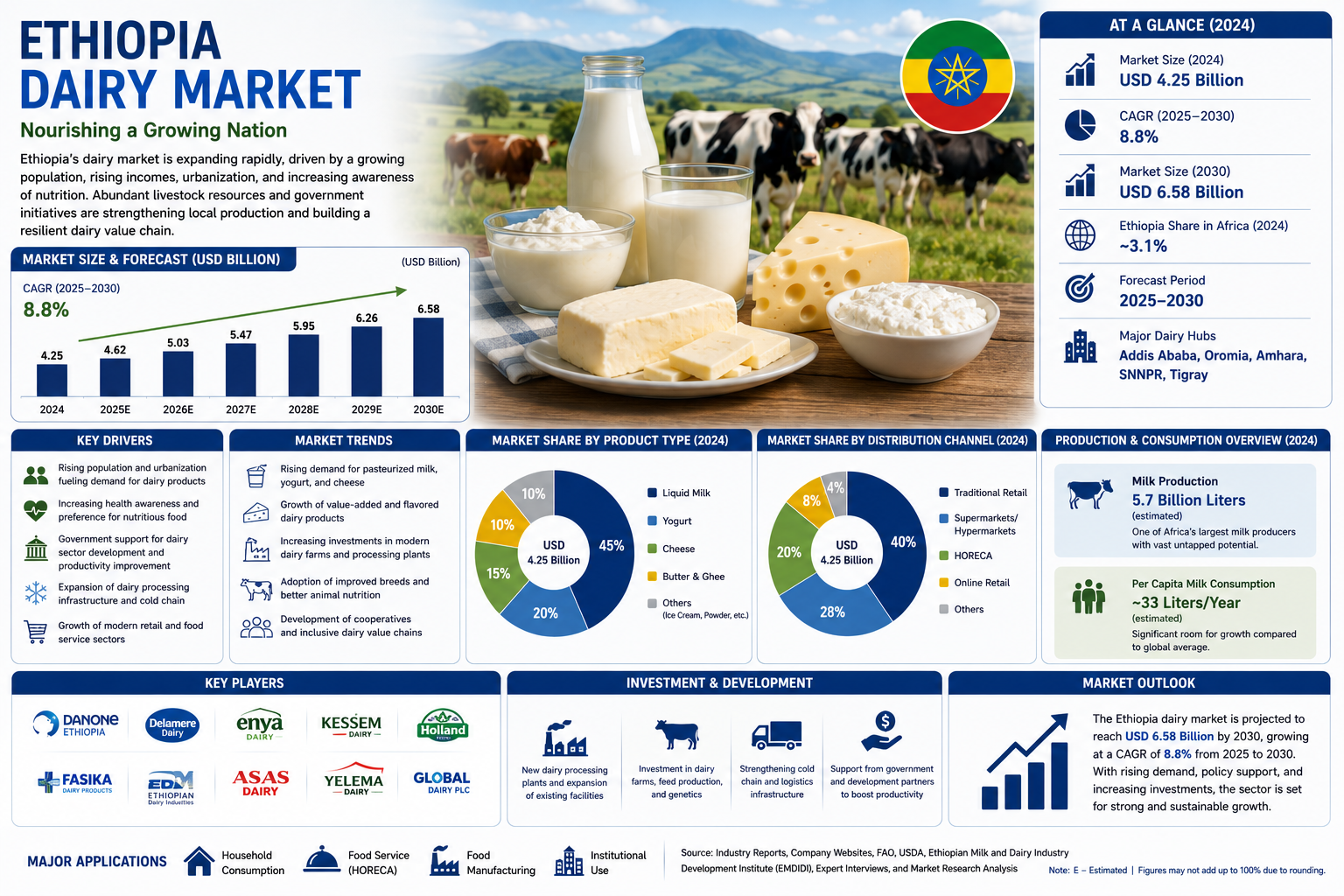
Ethiopia dairy market size was valued at USD 1,149.35 Million 2025 and is projected to reach USD 1,702.90 Million 2034, growing at a CAGR of 4.47% 2026-2034.
ETHIOPIA, May 19, 2026 /EINPresswire.com/ --𝗠𝗮𝗿𝗸𝗲𝘁 𝗢𝘃𝗲𝗿𝘃𝗶𝗲𝘄:
The Ethiopia dairy market reached 𝗨𝗦𝗗 𝟭,𝟭𝟰𝟵.𝟯𝟱 𝗠𝗶𝗹𝗹𝗶𝗼𝗻 in 2025 and is projected to reach 𝗨𝗦𝗗 𝟭,𝟳𝟬𝟮.𝟵𝟬 𝗠𝗶𝗹𝗹𝗶𝗼𝗻 by 2034, exhibiting a growth rate (𝗖𝗔𝗚𝗥) 𝗼𝗳 𝟰.𝟰𝟳% 𝗱𝘂𝗿𝗶𝗻𝗴 𝟮𝟬𝟮𝟲–𝟮𝟬𝟯𝟰. The Ethiopia dairy market is experiencing robust growth, powered by the government's Yelemat Tirufat (Bounty of the Basket) initiative that has nearly doubled national milk production from 5.8 billion to 12 billion litres in just three years, a landmark USD 600 million integrated dairy-farming and processing investment by Ethiopian Investment Holdings and UK-based Asset Green, and rapidly rising urban demand as per capita milk consumption is projected to climb from 19 litres to nearly 28 litres by 2030. The expansion of crossbreeding programs from 500,000 to 3.8 million animals annually is transforming the national herd, while the number of dairy processing companies supplying pasteurized products has more than tripled over the past decade.
𝗪𝗵𝘆 𝗶𝘀 𝗛𝗼𝘁 𝗧𝗼𝗱𝗮𝘆 𝗘𝘁𝗵𝗶𝗼𝗽𝗶𝗮 𝗗𝗮𝗶𝗿𝘆 𝗠𝗮𝗿𝗸𝗲𝘁?
Ethiopian Investment Holdings and the Ethiopian Agricultural Business Corporation signed a USD 600 million shareholders agreement with UK private-equity firm Asset Green to develop an integrated dairy-farming and processing project in February 2025; Holland Dairy commissioned a USD 2 million cold storage facility with over 400,000-cup capacity and a wastewater treatment plant processing 120,000 litres daily; the National Dairy Development Strategy 2022–2031 is targeting to quadruple milk production by 2031; the Yelemat Tirufat initiative has expanded annual crossbreeding from 500,000 to 3.8 million animals with crossbred cattle numbers rising eightfold nationwide; and the Ministry of Agriculture has invested in five new liquid nitrogen production units for artificial insemination services across the country.
𝗘𝘁𝗵𝗶𝗼𝗽𝗶𝗮 𝗗𝗮𝗶𝗿𝘆 𝗠𝗮𝗿𝗸𝗲𝘁 Summary:
• The Yelemat Tirufat (Bounty of the Basket) initiative, launched in November 2022, is delivering transformative results for Ethiopia's dairy sector. Milk production has nearly doubled from 5.8 billion to an estimated 12 billion litres in just three years, driven by aggressive crossbreeding programs that expanded from 500,000 animals in the first year to 3.8 million targeted in the third year — with 3.1 million already reached in nine months. The Ministry of Agriculture has invested in five new liquid nitrogen processing units for artificial insemination, with two already operational and three under installation, ensuring reliable breeding services across all major dairy-producing regions.
• Ethiopia's processing sector is undergoing significant modernization, with the number of dairy processing companies supplying pasteurized products more than tripling over the past decade. Lame Dairy, a subsidiary of Midroc Ethiopia Technology Group, opened a USD 14.5 million facility that doubled its processing capacity to 160,000 litres per day for its Shola Milk brand. Sebeta Agro Industry (Mama Dairy) is processing over 100,000 litres of dairy products daily from its facility near Addis Ababa, while Holland Dairy commissioned a USD 2 million cold storage facility to manage seasonal demand fluctuations.
• The landmark USD 600 million investment agreement signed in February 2025 between Ethiopian Investment Holdings, the Ethiopian Agricultural Business Corporation, and UK private-equity firm Asset Green represents one of the largest foreign investments in Ethiopia's agribusiness sector. This integrated dairy-farming and processing project is covering large-scale feed production and modern dairy operations, alongside Veris Investments and FrieslandCampina's investment in Holland Dairy Ethiopia — signaling growing international confidence in the country's dairy value chain.
• Ethiopia possesses Africa's largest livestock population with over 15 million milking cows, yet average yields remain significantly below global benchmarks, presenting massive room for productivity improvement. The government's 10-year development plan is targeting an increase in milk production from 4.69 billion to 11.8 billion litres, while the National Dairy Development Strategy 2022–2031, developed with the International Livestock Research Institute, provides a comprehensive roadmap to quadruple milk production and strengthen dairy value chains across all major producing regions.
• Rapid urbanization is reshaping consumption patterns, with per capita milk consumption projected to rise from 19 litres to nearly 28 litres by 2030. Rising health awareness and increasing per capita incomes are shifting consumer preferences toward pasteurized and value-added dairy products. Strengthening dairy cooperatives has demonstrated significant impact, increasing milk production by 17–57% and boosting dairy household profits up to 21-fold, while the expansion of urban retail networks is creating growing distribution channels for processed dairy products.
𝗛𝗼𝘄 𝗔𝗜 𝗶𝘀 𝗥𝗲𝘀𝗵𝗮𝗽𝗶𝗻𝗴 𝘁𝗵𝗲 𝗘𝘁𝗵𝗶𝗼𝗽𝗶𝗮 𝗗𝗮𝗶𝗿𝘆 𝗠𝗮𝗿𝗸𝗲𝘁:
Artificial intelligence is increasingly transforming the Ethiopia dairy market, with precision livestock farming solutions leveraging AI-powered sensors, mobile advisory platforms, and machine learning algorithms to optimize breeding outcomes, monitor animal health in real time, and improve milk yield predictions — as the global AI in precision livestock farming market grows from USD 2.7 billion to an expected USD 8.01 billion by 2030.
• 𝗔𝗜-𝗣𝗼𝘄𝗲𝗿𝗲𝗱 𝗕𝗿𝗲𝗲𝗱𝗶𝗻𝗴 𝗢𝗽𝘁𝗶𝗺𝗶𝘇𝗮𝘁𝗶𝗼𝗻: AI-driven genetic selection tools are enhancing Ethiopia's crossbreeding programs by analyzing genomic data, lactation records, and environmental factors to identify optimal sire-dam pairings for maximizing milk yield in local conditions. These platforms are supporting the Yelemat Tirufat initiative's expansion to 3.8 million animals annually by enabling more precise breed selection decisions that account for disease resistance, heat tolerance, and feed efficiency alongside production traits.
• 𝗠𝗼𝗯𝗶𝗹𝗲-𝗕𝗮𝘀𝗲𝗱 𝗔𝗜 𝗔𝗱𝘃𝗶𝘀𝗼𝗿𝘆 𝗦𝗲𝗿𝘃𝗶𝗰𝗲𝘀: Direct-to-farmer mobile advisory platforms leveraging AI are providing Ethiopian smallholder dairy farmers with personalized recommendations on feeding schedules, health management, and breeding timing — helping reduce calf and cow mortality while promoting balanced feed diets. These mobile-first approaches are particularly effective in reaching the millions of smallholder farmers who produce the bulk of Ethiopia's milk supply.
• 𝗔𝗜-𝗘𝗻𝗵𝗮𝗻𝗰𝗲𝗱 𝗦𝘂𝗽𝗽𝗹𝘆 𝗖𝗵𝗮𝗶𝗻 𝗮𝗻𝗱 𝗖𝗼𝗹𝗱 𝗖𝗵𝗮𝗶𝗻 𝗠𝗮𝗻𝗮𝗴𝗲𝗺𝗲𝗻𝘁: AI-powered logistics platforms are optimizing milk collection routes, cold chain temperature monitoring, and demand forecasting across Ethiopia's dairy supply chain — reducing post-harvest losses that have historically constrained market efficiency. Smart sensors integrated with AI analytics are enabling processors like Holland Dairy to manage inventory across their expanded cold storage facilities while predicting demand fluctuations linked to fasting seasons and regional consumption patterns.
• 𝗣𝗿𝗲𝗰𝗶𝘀𝗶𝗼𝗻 𝗟𝗶𝘃𝗲𝘀𝘁𝗼𝗰𝗸 𝗙𝗮𝗿𝗺𝗶𝗻𝗴 𝗮𝗻𝗱 𝗛𝗲𝗮𝗹𝘁𝗵 𝗠𝗼𝗻𝗶𝘁𝗼𝗿𝗶𝗻𝗴: Wearable sensors and AI algorithms are enabling real-time monitoring of animal health, activity levels, and behavioral patterns across Ethiopian dairy herds — detecting early signs of disease, estrus cycles, and nutritional deficiencies before they impact production. These precision livestock farming tools are helping to address the veterinary care gaps that constrain productivity in smallholder operations.
• 𝗔𝗜-𝗗𝗿𝗶𝘃𝗲𝗻 𝗤𝘂𝗮𝗹𝗶𝘁𝘆 𝗖𝗼𝗻𝘁𝗿𝗼𝗹 𝗶𝗻 𝗣𝗿𝗼𝗰𝗲𝘀𝘀𝗶𝗻𝗴: AI-powered quality assurance systems are being deployed across Ethiopian dairy processing facilities to monitor milk composition, detect adulteration, and ensure consistent product quality throughout pasteurization and packaging operations — supporting the growing consumer demand for quality-assured dairy products across expanding urban retail networks.
𝗥𝗲𝗾𝘂𝗲𝘀𝘁 𝗳𝗼𝗿 𝗮 𝘀𝗮𝗺𝗽𝗹𝗲 𝗿𝗲𝗽𝗼𝗿𝘁 𝗣𝗗𝗙: https://www.imarcgroup.com/ethiopia-dairy-market/requestsample
𝗠𝗮𝗿𝗸𝗲𝘁 𝗧𝗿𝗲𝗻𝗱𝘀 𝗮𝗻𝗱 𝗜𝗻𝘀𝗶𝗴𝗵𝘁𝘀:
• The Yelemat Tirufat initiative is fundamentally transforming Ethiopia's dairy landscape, with crossbred cattle numbers rising eightfold nationwide and the government investing in liquid nitrogen infrastructure across all major dairy clusters. The program's success in nearly doubling milk production to 12 billion litres is creating both opportunity and urgency for processing capacity expansion, cold chain development, and quality assurance systems to capture value from rapidly increasing raw milk volumes.
• International investment flows are accelerating dairy sector modernization, with the USD 600 million Asset Green integrated project, FrieslandCampina and Veris Investments backing Holland Dairy, and the government offering multi-year income tax holidays, duty-free machinery imports, and access to lease land in designated agricultural zones. These incentives are attracting both large-scale commercial operations and technology partners to Ethiopia's dairy value chain.
• Processing capacity is expanding rapidly, with Lame Dairy's USD 14.5 million facility now processing 160,000 litres daily, Sebeta Agro Industry handling over 100,000 litres, and Holland Dairy launching new product lines including premium cheese made with Dutch technology and banana yoghurt blending local flavors. The introduction of UHT and long-life milk products is extending shelf life and enabling distribution to underserved regions with limited cold chain infrastructure.
• The National Dairy Development Strategy 2022–2031, developed by the Ministry of Agriculture with the International Livestock Research Institute, provides a comprehensive framework targeting quadrupled milk production. This strategy is complemented by investments in artificial insemination services, improved forage development, and farmer cooperative strengthening — with cooperatives demonstrating 17–57% increases in milk production and up to 21-fold increases in household profit.
• Cold chain infrastructure development is emerging as a critical enabler of market growth, as Ethiopia addresses post-harvest losses caused by insufficient cooling, storage, and transportation facilities in rural and semi-urban areas. Holland Dairy's USD 2 million cold storage investment and the broader push to establish milk collection centers with cooling facilities are helping bridge the gap between expanding production volumes and market access.
• Consumer preferences are shifting toward pasteurized and value-added dairy products as urbanization accelerates and health awareness increases. Per capita milk consumption is projected to grow from 19 to 28 litres by 2030, while rising incomes among urban populations are creating demand for yoghurt, cheese, and flavored milk products that command higher margins than raw milk sales through informal channels.
𝗠𝗮𝗿𝗸𝗲𝘁 𝗚𝗿𝗼𝘄𝘁𝗵 𝗗𝗿𝗶𝘃𝗲𝗿𝘀:
𝗚𝗼𝘃𝗲𝗿𝗻𝗺𝗲𝗻𝘁-𝗟𝗲𝗱 𝗟𝗶𝘃𝗲𝘀𝘁𝗼𝗰𝗸 𝗧𝗿𝗮𝗻𝘀𝗳𝗼𝗿𝗺𝗮𝘁𝗶𝗼𝗻 𝗮𝗻𝗱 𝗕𝗿𝗲𝗲𝗱𝗶𝗻𝗴 𝗣𝗿𝗼𝗴𝗿𝗮𝗺𝘀
The Ethiopian government's commitment to dairy sector development through the Yelemat Tirufat initiative and the National Dairy Development Strategy 2022–2031 is providing structural growth support. The crossbreeding program's expansion to 3.8 million animals annually, investment in five liquid nitrogen production units for artificial insemination, and the 10-year development plan targeting 11.8 billion litres of milk production are collectively transforming the national dairy herd's productivity. These government-led programs, complemented by multi-year tax holidays and duty-free machinery imports for investors, are creating a supportive policy environment that attracts both domestic and international investment into the dairy value chain.
𝗥𝗶𝘀𝗶𝗻𝗴 𝗨𝗿𝗯𝗮𝗻𝗶𝘇𝗮𝘁𝗶𝗼𝗻 𝗮𝗻𝗱 𝗖𝗵𝗮𝗻𝗴𝗶𝗻𝗴 𝗖𝗼𝗻𝘀𝘂𝗺𝗽𝘁𝗶𝗼𝗻 𝗣𝗮𝘁𝘁𝗲𝗿𝗻𝘀
Ethiopia's rapid urbanization and rising per capita incomes are fundamentally reshaping dairy consumption patterns, with per capita milk consumption projected to grow from 19 to 28 litres by 2030. Growing health awareness among urban consumers is driving preference shifts toward pasteurized, fortified, and value-added dairy products. The expansion of modern retail networks in Addis Ababa and regional urban centers is creating structured distribution channels for processed dairy products, while increasing demand for yoghurt, cheese, and flavored milk products is pushing processors to diversify their product portfolios beyond basic liquid milk.
𝗜𝗻𝘃𝗲𝘀𝘁𝗺𝗲𝗻𝘁 𝗶𝗻 𝗣𝗿𝗼𝗰𝗲𝘀𝘀𝗶𝗻𝗴 𝗮𝗻𝗱 𝗩𝗮𝗹𝘂𝗲 𝗖𝗵𝗮𝗶𝗻 𝗜𝗻𝗳𝗿𝗮𝘀𝘁𝗿𝘂𝗰𝘁𝘂𝗿𝗲
Large-scale investments in dairy processing and cold chain infrastructure are creating the backbone for sustained market growth. The USD 600 million Asset Green integrated dairy project, Lame Dairy's USD 14.5 million processing expansion, Holland Dairy's USD 2 million cold storage facility, and FrieslandCampina's investment partnership are collectively expanding processing capacity, improving cold chain coverage, and introducing advanced manufacturing technologies. These investments are bridging the gap between rapidly growing production volumes and market demand, reducing post-harvest losses, and enabling the distribution of quality-assured dairy products to consumers across the country.
𝗠𝗮𝗿𝗸𝗲𝘁 𝗦𝗲𝗴𝗺𝗲𝗻𝘁𝗮𝘁𝗶𝗼𝗻:
IMARC Group's research categorizes the Ethiopia dairy market as follows:
𝗕𝘆 𝗣𝗿𝗼𝗱𝘂𝗰𝘁 𝗧𝘆𝗽𝗲:
• Liquid Milk
• Yoghurt
• Cheese
• Butter
• Powder
𝗕𝘆 𝗥𝗲𝗴𝗶𝗼𝗻:
• Oromia Region
• Addis Ababa
• Amhara Region
• SNNPR Region
• Tigray Region
• Others
𝗞𝗲𝘆 𝗣𝗹𝗮𝘆𝗲𝗿𝘀:
The competitive landscape of the Ethiopia dairy market features a mix of established domestic processors, cooperative-based enterprises, and international investors. Key players operating in the market include Holland Dairy, Lame Dairy (Midroc Ethiopia Technology Group), Sebeta Agro Industry (Mama Dairy), Family Milk, and Genesis Farm. Detailed profiles of all major companies are provided within the full IMARC Group research report.
𝗥𝗲𝗰𝗲𝗻𝘁 𝗡𝗲𝘄𝘀 𝗮𝗻𝗱 𝗗𝗲𝘃𝗲𝗹𝗼𝗽𝗺𝗲𝗻𝘁𝘀:
𝗙𝗲𝗯𝗿𝘂𝗮𝗿𝘆 𝟮𝟬𝟮𝟱: Ethiopian Investment Holdings and the Ethiopian Agricultural Business Corporation signed a USD 600 million shareholders agreement with UK private-equity firm Asset Green to develop an integrated dairy-farming and processing project, marking one of the largest foreign investments in Ethiopia's agribusiness sector.
𝗝𝘂𝗻𝗲 𝟮𝟬𝟮𝟱: Holland Dairy commissioned a USD 2 million cold storage facility with over 400,000-cup capacity and a matching wastewater treatment plant processing 120,000 litres daily, designed to offset demand drops during Ethiopia's fasting seasons.
𝗠𝗮𝘆 𝟮𝟬𝟮𝟱: Holland Dairy unveiled a new premium cheese product made entirely from locally sourced milk using advanced Dutch technology, supporting more than 4,000 Ethiopian smallholder farmers and meeting international quality standards.
𝟮𝟬𝟮𝟱: Holland Dairy launched a new Banana Yoghurt made with real Ethiopian bananas, blending local flavor and dairy innovation while strengthening sourcing relationships with smallholder banana and dairy farmers across the country.
𝗗𝗲𝗰𝗲𝗺𝗯𝗲𝗿 𝟮𝟬𝟮𝟯: Ethiopia officially unveiled its National Dairy Development Strategy 2022–2031, developed by the Ministry of Agriculture in collaboration with the International Livestock Research Institute and other partners, providing a roadmap to quadruple milk production and strengthen dairy value chains nationwide.
𝟮𝟬𝟮𝟱: The Yelemat Tirufat initiative reached 3.1 million animals in nine months of its third year against a target of 3.8 million, with crossbred cattle numbers rising eightfold nationwide and the Ministry of Agriculture commissioning new liquid nitrogen production units across major dairy-producing regions.
𝗕𝗿𝗼𝘄𝘀𝗲 𝘁𝗵𝗲 𝗳𝘂𝗹𝗹 𝗿𝗲𝗽𝗼𝗿𝘁 𝘄𝗶𝘁𝗵 𝗧𝗢𝗖 𝗮𝗻𝗱 𝗹𝗶𝘀𝘁 𝗼𝗳 𝗳𝗶𝗴𝘂𝗿𝗲𝘀: https://www.imarcgroup.com/ethiopia-dairy-market
𝗡𝗼𝘁𝗲: 𝗜𝗳 𝘆𝗼𝘂 𝗿𝗲𝗾𝘂𝗶𝗿𝗲 𝗮𝗻𝘆 𝘀𝗽𝗲𝗰𝗶𝗳𝗶𝗰 𝗶𝗻𝗳𝗼𝗿𝗺𝗮𝘁𝗶𝗼𝗻 𝘁𝗵𝗮𝘁 𝗶𝘀 𝗻𝗼𝘁 𝗰𝗼𝘃𝗲𝗿𝗲𝗱 𝗰𝘂𝗿𝗿𝗲𝗻𝘁𝗹𝘆 𝘄𝗶𝘁𝗵𝗶𝗻 𝘁𝗵𝗲 𝘀𝗰𝗼𝗽𝗲 𝗼𝗳 𝘁𝗵𝗲 𝗿𝗲𝗽𝗼𝗿𝘁, 𝘄𝗲 𝘄𝗶𝗹𝗹 𝗽𝗿𝗼𝘃𝗶𝗱𝗲 𝘁𝗵𝗲 𝘀𝗮𝗺𝗲 𝗮𝘀 𝗮 𝗽𝗮𝗿𝘁 𝗼𝗳 𝘁𝗵𝗲 𝗰𝘂𝘀𝘁𝗼𝗺𝗶𝘇𝗮𝘁𝗶𝗼𝗻.
Other Report by IMARC Group:
Ethiopia Bakery Products Market 2026: https://www.imarcgroup.com/ethiopia-bakery-products-market
Ethiopia Fruits Vegetables Market 2026: https://www.imarcgroup.com/ethiopia-fruits-vegetables-market
Ethiopia Coffee Market 2026: https://www.imarcgroup.com/ethiopia-coffee-market
Ethiopia Online Grocery Market 2026: https://www.imarcgroup.com/ethiopia-online-grocery-market
Ethiopia Warehousing Market 2026: https://www.imarcgroup.com/ethiopia-warehousing-market
𝗔𝗯𝗼𝘂𝘁 𝗨𝘀
IMARC Group is a global management consulting firm that helps the world's most ambitious changemakers to create a lasting impact. The company provides a comprehensive suite of market entry and expansion services including thorough market assessment, feasibility studies, company incorporation assistance, factory setup support, regulatory approvals and licensing navigation, branding, marketing and sales strategies, competitive landscape and benchmarking analyses, pricing and cost research, and procurement research.
𝗖𝗼𝗻𝘁𝗮𝗰𝘁 𝗨𝘀
𝗜𝗠𝗔𝗥𝗖 𝗚𝗿𝗼𝘂𝗽
134 N 4th St., Brooklyn, NY 11249, USA
𝗘𝗺𝗮𝗶𝗹: sales@imarcgroup.com
𝗧𝗲𝗹. 𝗡𝗼.: (D) +91 120 433 0800
𝗨𝗻𝗶𝘁𝗲𝗱 𝗦𝘁𝗮𝘁𝗲𝘀: +1-201-971-6302
Elena Anderson
IMARC Services Private Limited
+1 201-971-6302
email us here
Legal Disclaimer:
EIN Presswire provides this news content "as is" without warranty of any kind. We do not accept any responsibility or liability for the accuracy, content, images, videos, licenses, completeness, legality, or reliability of the information contained in this article. If you have any complaints or copyright issues related to this article, kindly contact the author above.
